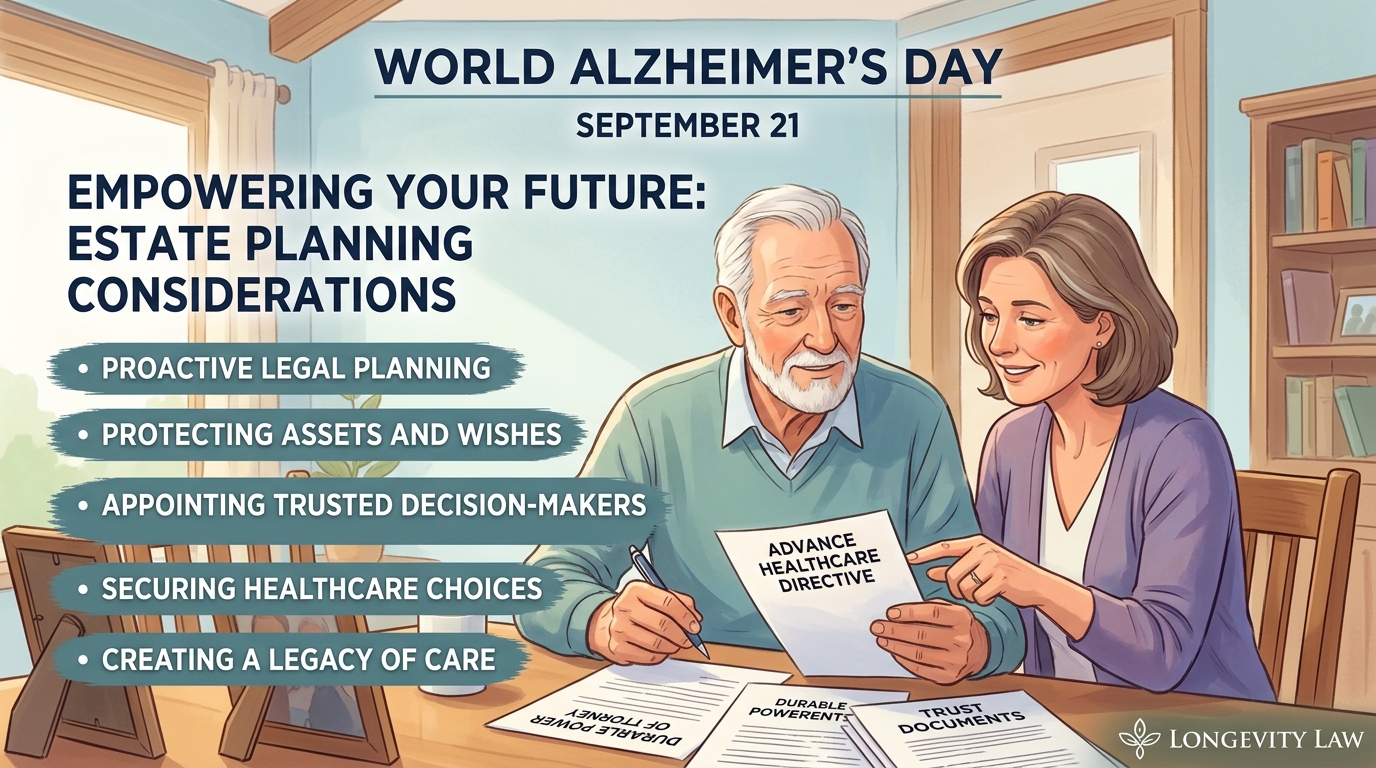
World Alzheimer’s Day - Sept. 21st - Estate Planning Considerations
World Alzheimer’s Day, observed annually on September 21, is an important opportunity to recognize the realities faced by people living with Alzheimer’s disease and the loved ones who support them. Medical care, treatment, and caregiving are often central to these discussions, but estate planning deserves attention as well.
An Alzheimer’s diagnosis may eventually affect memory, communication, judgment, and the ability to make decisions. Those changes can make financial, legal, and healthcare responsibilities increasingly difficult to manage. Taking action early gives an individual a meaningful opportunity to direct important choices and gives family members a clearer path to follow later.
At Longevity Law, we help individuals and families throughout the San Francisco Bay Area create personalized estate plans that protect their wishes and reduce uncertainty. Thoughtful planning is not only about signing documents. It is about preserving control, supporting loved ones, and preparing for future needs with care.
Why Early Estate Planning Matters After an Alzheimer’s Diagnosis
Timing is one of the most important considerations after an Alzheimer’s diagnosis. It can be tempting to delay planning until the condition becomes more advanced, but postponing these decisions can lead to avoidable legal and practical challenges.
Generally, a person must have the capacity to understand the decisions involved when creating or changing estate planning documents. During the earlier stages of Alzheimer’s, many individuals can still participate in the process, explain their preferences, and make informed choices. As the disease advances, questions about capacity may make it harder to establish or update a plan.
Beginning early can help ensure that an individual’s choices are clearly documented and legally effective. It can also bring reassurance to relatives who know that the plan reflects deliberate decisions made by their loved one.
Choose Trusted Financial Decision-Makers
A durable power of attorney can be a particularly important part of estate planning for a person living with Alzheimer’s or another form of dementia. This document allows someone to appoint a trusted individual to handle financial and legal matters if they can no longer manage those responsibilities independently.
Depending on the authority provided, the designated person may be able to pay bills, oversee accounts, address property-related matters, and handle other financial obligations. Selecting this person carefully is essential because the role can carry substantial responsibility.
Without a valid power of attorney, family members may need to seek legal authority through court proceedings before they can assist. That process may be expensive, time-consuming, and emotionally difficult. Longevity Law helps Bay Area families consider these decisions before a crisis creates additional pressure.
Put Healthcare Directives in Place
Healthcare planning is another important element of a comprehensive estate plan. Advance healthcare directives and healthcare powers of attorney allow a person to identify someone they trust to make medical decisions if they are unable to communicate their own preferences.
These documents can also provide direction about treatment choices and other healthcare matters. Clear instructions can be especially meaningful when families must make decisions during uncertain or emotional circumstances.
By addressing healthcare preferences early, individuals can remain part of the conversation and help those closest to them understand what matters most. For families, these documents can offer needed guidance while honoring a loved one’s wishes.
Review California Trusts and Wills
A current will or trust is essential to ensuring that assets are handled according to a person’s intentions. For an individual diagnosed with Alzheimer’s, reviewing trusts and wills in California early can help confirm that existing documents still reflect current wishes and family circumstances.
Outdated estate planning documents can lead to confusion, delays, and disagreements about the management or distribution of assets. Updating a plan while the individual can actively participate helps create a more reliable roadmap for the people who may later need to carry out those instructions.
Longevity Law provides personalized support for families seeking an estate planning attorney in the Bay Area. We work to make the planning process approachable while keeping the focus on the client’s goals, relationships, and legacy.
Plan for Future Care Expenses
Alzheimer’s disease can involve care needs that change over time. For that reason, planning for long-term care should be part of a proactive conversation about an estate plan.
Caregiving, residential care, and other support services may create significant financial demands for an individual and their family. Preparing in advance can help families consider future expenses and explore available options for addressing care needs before urgent decisions are required.
Early planning may provide greater flexibility and reduce financial stress later. It also gives families more room to make thoughtful choices rather than being forced to act quickly in a difficult moment.
Talk Openly With Loved Ones
Estate planning involves more than legal paperwork. Honest conversations with family members are an equally meaningful part of the process.
Discussing illness, incapacity, financial priorities, and future healthcare wishes may feel uncomfortable. However, avoiding these conversations can leave loved ones uncertain about what a person would have wanted. Sharing personal values, goals, and preferences can help everyone better understand the plan.
Open communication can reduce misunderstandings and help prevent conflict if challenging decisions arise. It also allows a person living with Alzheimer’s to remain involved in planning for their own future for as long as possible.
Revisit Existing Estate Planning Documents
Families should not assume that an older estate plan still meets current needs. Changes in health, family relationships, personal priorities, and financial circumstances can all affect whether existing documents remain appropriate.
Regularly reviewing powers of attorney, healthcare directives, wills, and trusts can help confirm that each document continues to serve its intended purpose. World Alzheimer’s Day is a meaningful reminder to revisit those important materials and make sure they still align with personal goals.
This review can be especially valuable for families with assets or loved ones in more than one location. Longevity Law offers cross-border estate planning guidance for clients with connections to California, Asia, Canada, and beyond, helping them consider how their planning choices fit their broader circumstances.
Protecting Wishes, Family, and Legacy
An Alzheimer’s diagnosis can bring understandable uncertainty, but an early and carefully considered estate plan can provide direction. By establishing financial powers of attorney, healthcare directives, trusts, wills, and plans for long-term care, individuals can protect their wishes and reduce future burdens for the people they love.
Longevity Law, led by attorney Michelle Bau Yu, offers compassionate estate planning support in English, Cantonese, and Mandarin. Whether you need to create a plan, update existing documents, or seek trust administration guidance, our team is here to help you take the next step with clarity.
To schedule a Bay Area estate planning consultation, contact Longevity Law in Los Altos at (408) 886-0167. We would be honored to help you establish a plan that safeguards your wishes, supports your loved ones, and protects the legacy you have built.